

Why MSPs Should Bundle Immutable Backup — and How to Package It
Clients no longer buy "backups included" — they buy provable recovery, and immutability is what makes the proof possible.
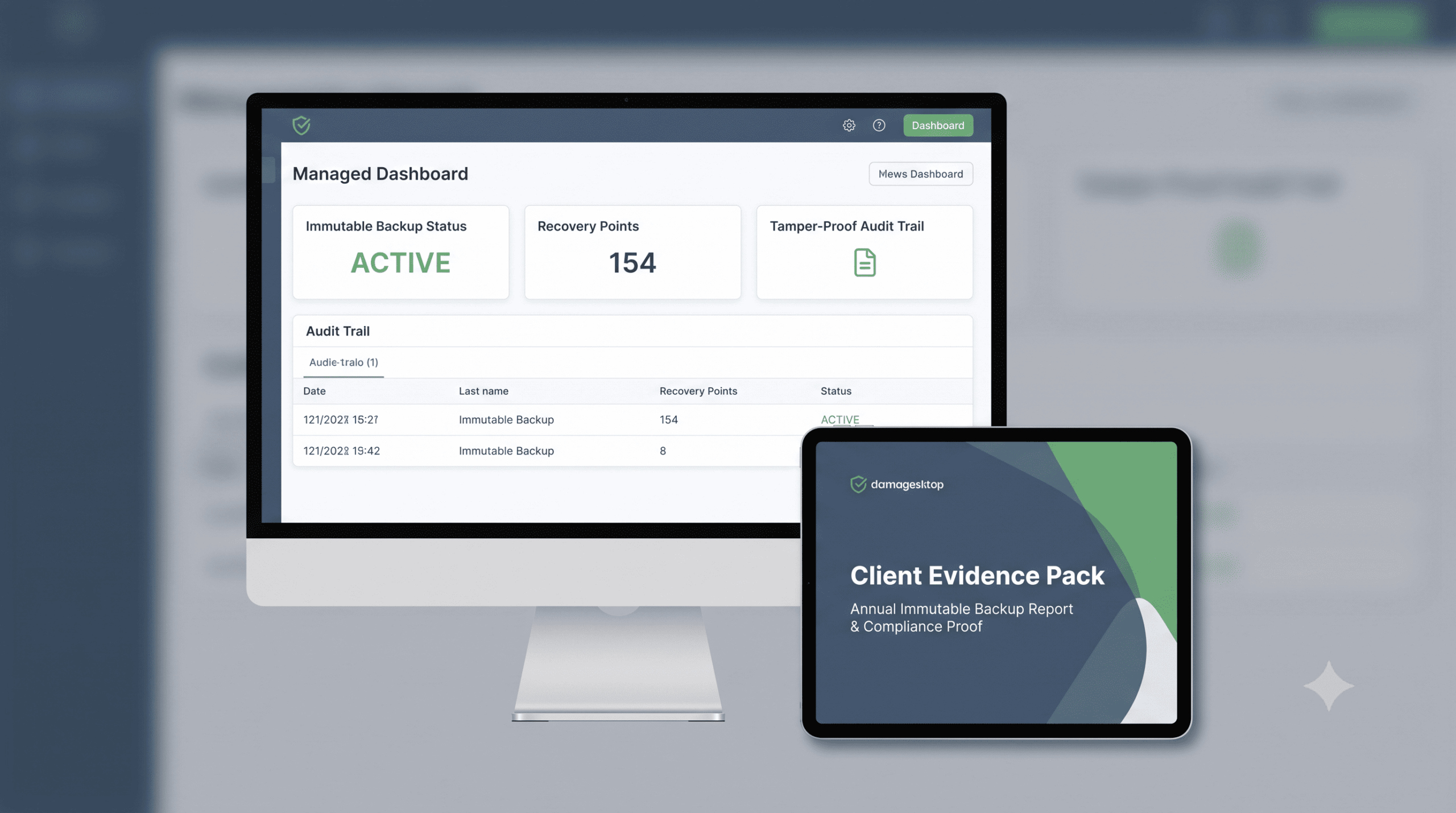
An MSP wins a contract renewal meeting without showing a single dashboard. Instead, they put two documents on the table: last quarter's restore-test report for the client's tenant, and the immutability certificate for the storage those backups live on. The client's cyber insurer had asked for exactly these artifacts at renewal — and the MSP was the only bidder who had them ready.
This is where the managed services market has moved. Ransomware operators deliberately target backup infrastructure, insurers condition coverage on tamper-proof copies, and NIS2 makes clients' boards personally accountable for demonstrable recovery capability. For MSPs, that shift converts immutable backup from a cost line into the most defensible service tier on the price list.
The misconception to drop: backup is a commodity checkbox in the MSP stack. Unverified backup is a commodity. Provable recovery — immutable copies, tested restores, audit-ready evidence — is a differentiated service clients in regulated sectors now actively shop for.
What Does "Immutable Backup as a Service" Actually Include?
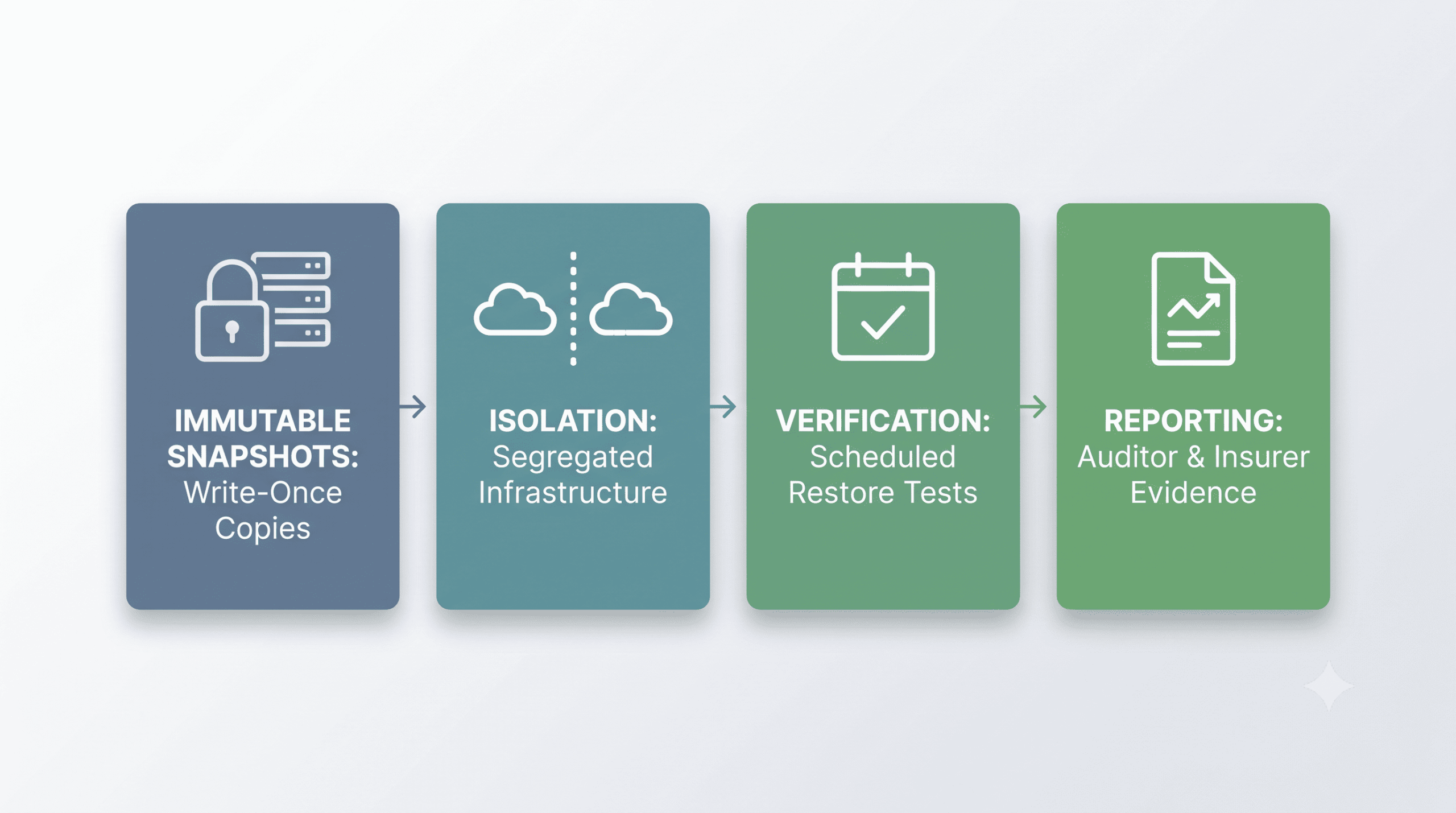
An MSP immutable backup bundle is more than WORM storage. The service wraps four components: immutable snapshots (write-once copies that neither the client, the MSP, nor an attacker can alter before retention expires), isolation (separate credentials and infrastructure, air-gapped from client production and from the MSP's own RMM), verification (scheduled restore tests with documented results per client), and reporting (evidence packs formatted for auditors and insurers).
Why the Isolation Component Is Existential for MSPs
MSPs are force multipliers — for their clients and for attackers. A compromised RMM platform or shared admin credential can reach every managed environment simultaneously, which is why supply-chain attacks on service providers feature prominently in ENISA's threat landscape analysis. If client backups are reachable through the same compromised tooling, the MSP's breach becomes every client's data loss. Immutable copies on segregated infrastructure are what break that chain.
Do Clients Actually Pay More for Immutability?
Yes — when it is sold as risk transfer rather than technology. What a regulated client buys in the higher tier is concrete: a restore SLA they can show their board, quarterly test evidence their auditor accepts, immutability documentation their insurer requires at renewal, and EU-jurisdiction storage their DPO signs off on. Each artifact answers a question someone else is asking the client — and that is what justifies price.
The commercial logic runs through the NIS2 Directive: in-scope clients must demonstrate backup management and business continuity, with management personally accountable, and many discharge that duty through their service provider. An MSP whose standard deliverable includes the evidence pack effectively sells NIS2 compliance support as a by-product of backup — a bundle competitors quoting raw storage terabytes cannot match.
The Risks of Bundling Wrong
Three failure patterns recur. First, immutability theater: marketing copies as "immutable" when retention can be shortened by an admin — a distinction attackers, auditors, and eventually lawyers will test. Second, monolithic packaging: one-size bundles that force SMB clients to overpay or enterprise clients to under-protect, losing both. Third, untested promises: an RTO in the contract that has never been rehearsed against the clock — the industry-wide gap between claimed and actual recovery times is where MSP reputations go to die, and according to IBM's Cost of a Data Breach Report the financial stakes of slow recovery run into millions per incident.
Each failure has the same root: selling the word "backup" instead of operating the discipline of recovery.
How to Build the Bundle: A Five-Step Plan
Audit your own stack first. Verify that your backup platform's immutability is storage-enforced (not policy-based), that repositories are isolated from your RMM's credential space, and that your MSP backup platform supports multi-tenant separation.
Tier by outcome, not gigabytes. Structure e.g. Essential (daily immutable snapshots, 30-day retention, annual test), Business (extended retention, quarterly tests, restore SLA), and Compliance (long retention, NIS2/GDPR evidence packs, DR failover via disaster recovery as a service).
Put the SLA where your operations can meet it. Define RPO/RTO per tier from measured restore-test data, not aspiration — then keep measuring so the number stays true.
Make evidence a deliverable. Automate per-client quarterly reports: snapshot immutability status, test results, achieved RTO. This document is the renewal conversation.
Anchor on EU sovereignty. Store client copies exclusively in EEA data centers under European jurisdiction — for many regulated clients this single line item, backed by a managed ransomware protection architecture, decides the tender.
Tiering Example: What Each Level Buys
| Essential | Business | Compliance | |
|---|---|---|---|
| Immutable snapshots | Daily | Daily + intraday critical | Continuous-model options |
| Retention | 30 days | 1 year | Per regulatory obligation |
| Restore testing | Annual | Quarterly, documented | Quarterly + client-witnessed |
| SLA | Best effort | Defined RTO | Contractual RTO + DR failover |
| Evidence pack | — | Test reports | Full NIS2/insurer documentation |
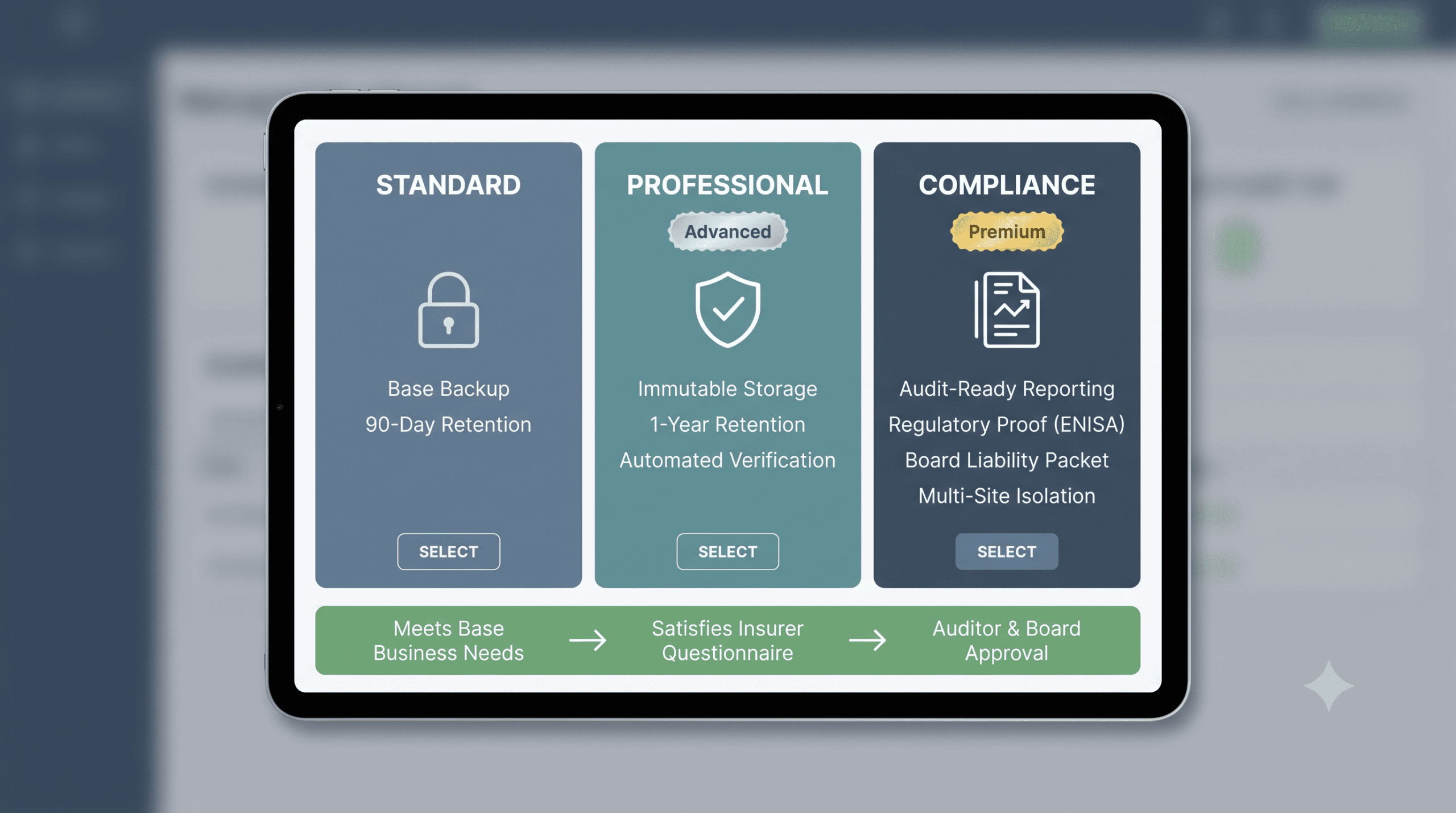
The table sells itself in client conversations precisely because it maps tiers to the client's external pressures — the insurer's questionnaire, the auditor's checklist, the board's liability — rather than to storage quotas the client can't evaluate.
Conclusion
The MSP market is separating into providers who include backups and providers who guarantee recovery — and ransomware economics, insurance underwriting, and NIS2 enforcement are all pushing clients toward the second group. Immutable storage, isolated from your own tooling, verified by tested restores, and documented in evidence packs clients can hand to auditors: that is a bundle with defensible margins and renewals that close themselves. If you're evaluating how to add storage-enforced immutability and multi-tenant isolation to your portfolio, we're glad to talk through the architecture.
Frequently Asked Questions
What is an immutable backup service for MSPs?
It is a managed backup offering built on write-once-read-many (WORM) storage: snapshots that cannot be altered or deleted by anyone — client admins, MSP technicians, or attackers — until retention expires. A complete service adds isolation from production and RMM credential spaces, scheduled restore testing, and per-client evidence reporting. The immutability must be enforced at the storage layer; retention rules an administrator can shorten do not qualify.
Why are MSPs a preferred target for ransomware groups?
Because one successful intrusion multiplies: MSP tooling such as RMM platforms holds privileged access to many client environments simultaneously, so compromising the provider compromises the customer base. Attackers also know that destroying backups maximizes ransom leverage, which makes MSP-managed backup infrastructure a priority target. Isolated, immutable copies on segregated infrastructure are what prevent an MSP breach from cascading into client data loss.
How should MSPs price immutable backup bundles?
Price by outcome tier rather than storage volume: retention length, restore SLA, testing cadence, and compliance reporting each map to a concrete client need — insurer requirements, NIS2 evidence, board-level risk appetite. Entry tiers cover daily immutable snapshots with basic retention; higher tiers add contractual RTOs, quarterly documented tests, and audit-ready evidence packs. Clients in regulated sectors accept premium pricing when each tier component answers a question their auditor or insurer is already asking.