

How Public Sector IT Teams Keep Services Online Under Attack
Government IT is the EU's most targeted sector — monitoring is how you see trouble coming, and backup is how you survive it anyway.
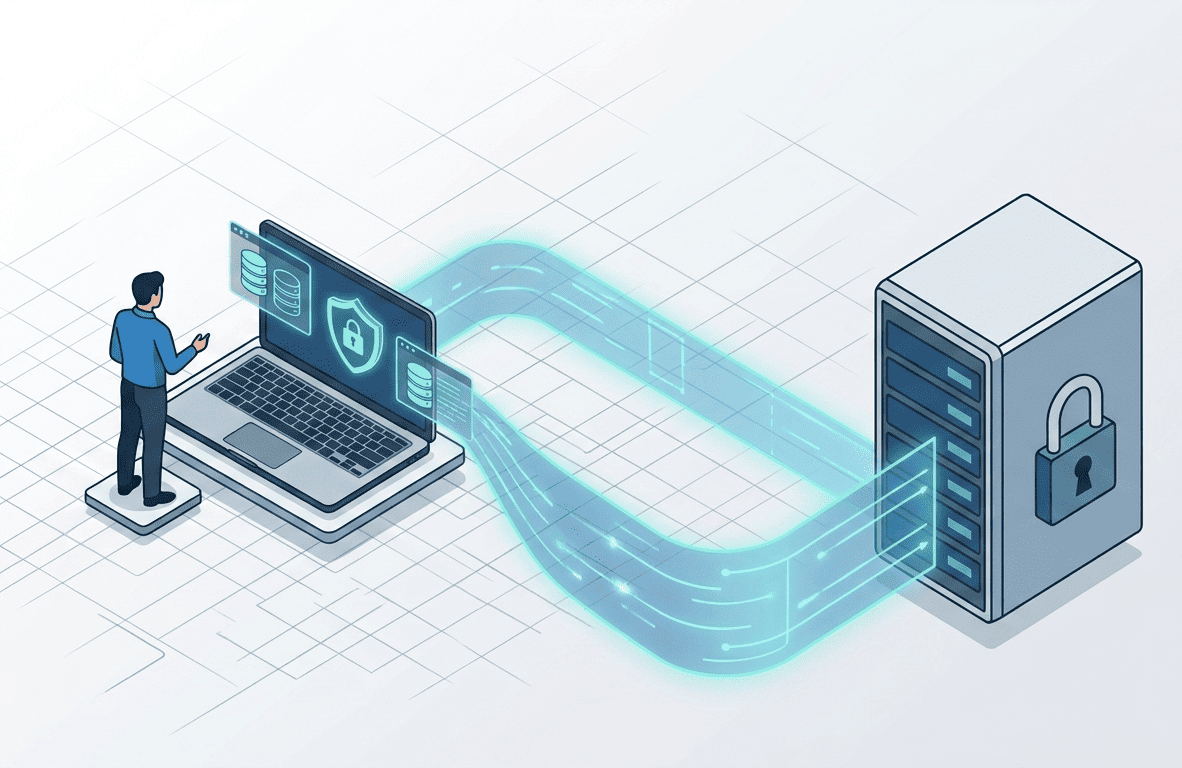
On a Tuesday morning, a municipality's citizen portal slows to a crawl, then stops. Permit applications freeze, appointment systems go dark, and the phone lines fill with residents who cannot reach services they are legally entitled to. The cause turns out to be a DDoS attack that had been building for forty minutes — visible in the traffic data the whole time, had anyone been looking at it.
Public administration is not an incidental victim. According to ENISA's Threat Landscape report, public administration is the most targeted sector in the EU, accounting for roughly 38% of reported incidents, with DDoS and ransomware leading. At the same time, NIS2 obliges public entities to manage these risks demonstrably — with directors personally accountable.
The misconception worth retiring: monitoring is something you buy a dashboard for. Monitoring is a strategy — what you watch, who reacts, and how it connects to recovery — and a dashboard nobody acts on is just decoration.
What Should Public Sector IT Actually Monitor?
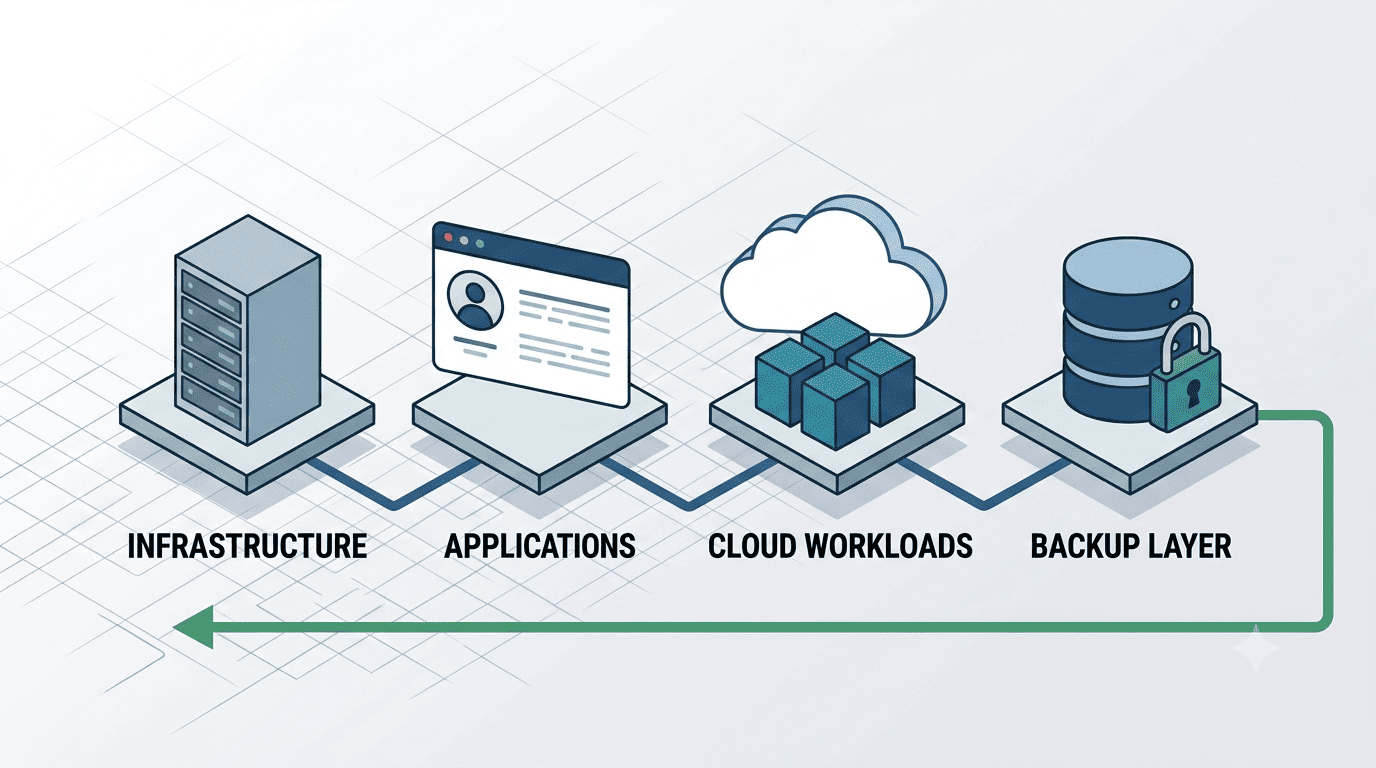
Effective uptime monitoring covers four layers: infrastructure (servers, network, storage), applications (portals, registries, case-management systems), cloud workloads (Microsoft 365 and other SaaS, where the shared responsibility model leaves data protection with you), and the backup environment itself — jobs, restore points, and repository health.
The Signals That Matter Most
For public services, prioritize citizen-facing availability (synthetic checks that use services the way residents do), anomalous traffic patterns (the early signature of DDoS), certificate and patch status on internet-facing systems, and backup job success with verified restore points. Each metric should have an owner and an escalation path; an alert without a responder is a log entry, not a control.
Why Is the Public Sector Targeted So Heavily?
Because pressure works differently on governments. A disrupted business loses revenue; a disrupted public service creates immediate political and social pressure — which is precisely the leverage hacktivists and state-aligned groups want. ENISA attributes the majority of public administration incidents to DDoS attacks driven by such groups, alongside ransomware operators who know that a paralyzed municipality faces pressure to restore services fast.
Public entities also carry structural handicaps: long procurement cycles that leave legacy systems in production, thin IT staffing relative to the estate they manage, and troves of citizen data that raise the stakes of any breach. Under the NIS2 Directive, public administration is explicitly in scope: proactive detection, incident handling, backup management, and crisis procedures are legal requirements, not aspirations.
What Downtime Costs When the Service Is Public
The cost of public sector downtime is measured in more than money, but the money is real too: emergency IT recovery, overtime, and — under NIS2 — potential fines for entities that cannot demonstrate adequate risk management. The less quantifiable costs bite harder: citizens who cannot reach essential services, staff thrown back on paper processes, and headlines that erode trust in digital government for years.
There is also a compliance-evidence dimension that many public IT teams underestimate. NIS2 audits ask for proof: logs showing proactive detection, documented incident response, and evidence of tested recovery. A monitoring platform that produces audit-ready reporting — and a managed RMM setup that keeps patching and alerting consistent across the estate — turns daily operations into the documentation regulators ask for.
Building an Uptime Strategy: A Five-Step Plan
Inventory and rank critical services. List every citizen-facing and internal-critical system, and assign each a maximum tolerable downtime. This ranking drives everything else.
Deploy layered monitoring with a baseline. Cover endpoints, network, applications, and cloud workloads; record two weeks of normal behavior so anomalies are detectable against it.
Wire alerts to people, not inboxes. Define who responds to what, within which timeframe, and with what authority — including out-of-hours arrangements. Test the chain with a drill.
Monitor the backup layer like a production system. Track job success, restore-point integrity, and repository access. A backup that silently failed for three weeks is a monitoring failure too.
Rehearse recovery quarterly. Run restore and failover exercises against your RTO targets using a tested disaster recovery procedure, and file the results as NIS2 evidence.
Prevention vs. Recovery: What Monitoring Can and Cannot Do
| Monitoring (prevention & detection) | Backup & DR (recovery) | |
|---|---|---|
| Goal | See problems before citizens do | Restore service when prevention fails |
| Handles | Capacity issues, failing hardware, DDoS onset, patch gaps | Ransomware, data destruction, major outages |
| NIS2 role | Proactive risk management evidence | Backup management & crisis-procedure evidence |
| Limitation | Cannot undo damage | Cannot prevent the incident |
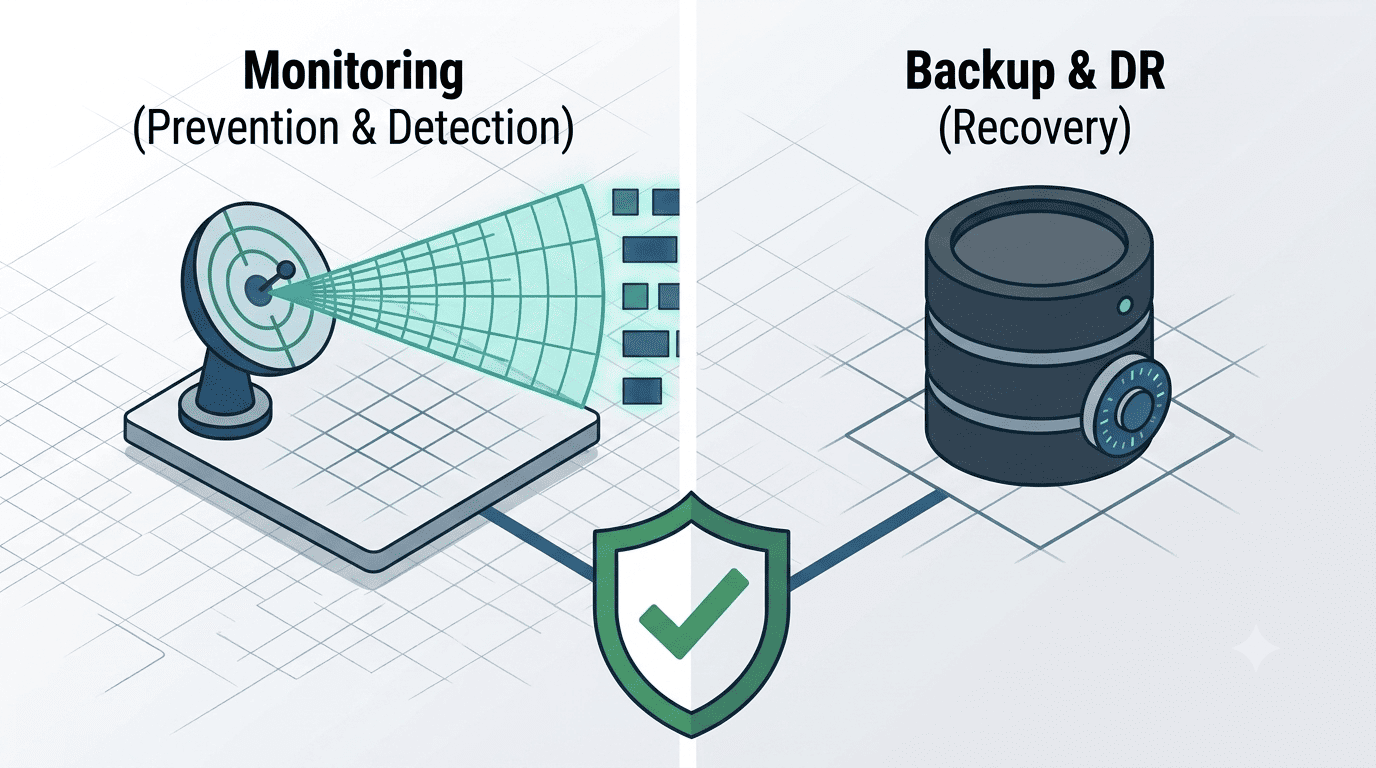
The two halves are complementary by design. Monitoring shortens detection time and prevents the preventable; immutable, EU-hosted backups with dedicated ransomware protection guarantee there is always a clean copy to fall back on when an attacker gets through anyway. Public entities that fund only the first half discover the gap at the worst possible moment.
Conclusion
Public sector uptime is now a regulated outcome: ENISA's data says your sector is attacked most, and NIS2 says you must be demonstrably ready anyway. The playbook is not mysterious — rank your services, monitor all four layers against a baseline, connect alerts to accountable responders, and rehearse recovery until the evidence file writes itself. If you want an outside view on whether your monitoring and recovery setup would satisfy an auditor — or an attacker — we're glad to help you assess it.
Frequently Asked Questions
What are the NIS2 monitoring requirements for public sector organizations?
NIS2 requires in-scope public entities to implement risk-management measures that include proactive threat detection, incident handling, business continuity, and backup management. In practice this means continuous monitoring of critical systems, documented alerting and response procedures, and evidence of tested recovery. Management bodies are personally accountable for compliance, and supervisory authorities can impose significant fines on entities that cannot demonstrate these measures.
Which uptime metrics should government IT teams track?
The core set is service availability per critical system (measured with synthetic checks that mimic citizen usage), mean time to detect and mean time to repair, backup job success rate with verified restore points, and actual recovery time from quarterly tests versus RTO targets. Compliance-oriented teams also track the number of incidents detected proactively versus reported by users — a direct measure of whether monitoring is working.
Can monitoring alone prevent downtime in public sector IT?
No. Monitoring prevents the outages that announce themselves — capacity exhaustion, failing hardware, building DDoS traffic — but it cannot undo a successful ransomware attack or data destruction. Those scenarios require immutable backups and a tested disaster recovery procedure. An uptime strategy needs both layers: monitoring to minimize incidents, and recovery capability to bound the damage of the ones that happen anyway.